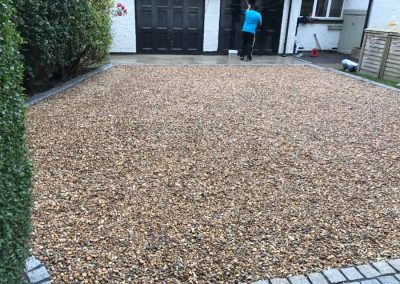
The main resin driveway pros and cons come down to this: resin bound gives a smooth, permeable, low-maintenance surface that looks clean for many years, but it costs more than tarmac or gravel and is only as good as the base and the installer. It is worth it if you want a neat finish with little upkeep and choose an installer who prepares the base properly and uses UV-stable resin.
- Resin bound surfaces let rainwater drain through, which helps meet the rules for paving front gardens.
- There are no loose stones, sand joints or blocks to work loose, so upkeep is mostly sweeping.
- Upfront cost is usually higher than tarmac, gravel or standard block paving.
- Most problems, such as cracks and lifting edges, start with a poor base underneath.
- Cheaper non-UV-stable resin can darken or discolour in sunlight.
- Installation needs dry weather, so jobs can be delayed by rain or extreme heat.
Resin driveways have become one of the most asked-about options for front gardens across North London. They look smart, they drain well and they do not shed stones onto the pavement. But they are not the right choice for every home, and a poorly laid resin driveway can cause problems within months.
This guide sets out the real resin driveway pros and cons, so you can decide whether it is worth it for your home and know what to check before you commit.
What is a resin bound driveway?
A resin bound driveway is made by mixing natural stone aggregate with a clear resin and trowelling it onto a prepared base. The result is a smooth, textured surface with small gaps between the stones, which lets water drain through.
It is different from resin bonded, where loose stone is scattered onto a layer of resin. Resin bonded has a rougher, gravel-like finish and is not permeable. When people talk about resin driveways for homes, they usually mean resin bound.
The pros of a resin driveway
Rainwater drains through it
Resin bound surfacing is porous, so rainwater soaks through instead of running off onto the road. That reduces puddles and helps with local flooding. It also matters for planning: paving more than 5 square metres of a front garden with a surface that drains to the road normally needs planning permission, while a permeable surface usually does not. The government guidance on permeable front gardens explains the rule.
A smooth finish with no loose stones
Unlike gravel, the stones are locked in place, so nothing gets kicked onto the pavement or carried into the house. The surface is even underfoot and easy for pushchairs, wheelchairs and bins.
Low maintenance
There are no sand joints to top up and no individual blocks to sink or work loose. Most of the upkeep is regular sweeping and an occasional wash. Weeds find it much harder to take hold than in block paving joints.
Plenty of colours and finishes
Aggregates come in a wide range of colours and stone sizes, from natural buff and silver tones to darker blends. Borders and contrasting edging can frame the driveway or pick out a path.
A long life when it is laid properly
A well-installed resin driveway on a sound base can last for many years, with industry guides commonly quoting 15 to 25 years. Lifespan depends mostly on the base underneath, the quality of the resin and how it is looked after.
Good grip
The textured surface keeps its grip in wet weather, which is reassuring on sloping driveways and paths.
The cons of a resin driveway
It costs more upfront
Resin bound is usually more expensive per square metre than tarmac, gravel or standard block paving. Smaller areas tend to cost more per square metre, and the price rises if the old surface has to be dug out and a new sub-base laid.
It is only as good as the base
Resin sits on top of whatever is underneath. A loose or poorly compacted sub-base leads to settlement and cracks, and laying resin over block paving is a well-known cause of failure because the blocks move and their outlines crack through. Sound tarmac or concrete can sometimes be resurfaced, but it needs checking first.
The weather has to cooperate
Resin cannot be laid in rain, and very cold or very hot weather affects how it cures. That means installation dates can move, particularly in winter and during summer heatwaves.
Cheaper resin can discolour
Non-UV-stable resin can darken or turn yellow in sunlight, and areas shaded by cars, bins or pots can end up a different shade. UV-stable resin avoids this, so it is worth confirming which type your installer uses.
Repairs can show
Damaged patches can be repaired, but new resin may look slightly different from a surface that has weathered for a few years. A clean, well-planned original installation matters more than easy repairs.
Regular oil leaks can damage it
Occasional drips can be cleaned up, but a car that leaks oil in the same spot for months can soften and break down the resin.
Moss in shady spots
Leaves and dirt left on the surface in damp, shaded areas can encourage moss and algae. Regular sweeping usually keeps this under control.
How resin compares with other driveways
| Surface | Drainage | Upkeep | Look | Upfront cost |
|---|---|---|---|---|
| Resin bound | Permeable | Low: sweeping and washing | Smooth, seamless | Higher |
| Block paving | Depends on type; permeable blocks available | Medium: joints, weeds, occasional relaying | Patterned, traditional | Medium to higher |
| Tarmac | Usually not permeable | Low | Plain, practical | Lower |
| Gravel | Permeable | Medium: raking and topping up | Natural, informal | Lowest |
Is a resin driveway worth it?
Resin is usually worth it if you:
- want a neat, modern finish with very little upkeep
- are paving a front garden and want a permeable surface
- have a sound base already, or are happy to pay for one to be built properly
- plan to stay in the home long enough to get value from a longer-lasting surface
Another surface may suit you better if you:
- need the lowest upfront cost, where tarmac or gravel usually wins
- want a traditional patterned look, where block paving fits better
- have heavy vehicles turning on the driveway every day
- have a car that regularly leaks oil and cannot be fixed
Questions to ask before you choose resin
- What base will the resin be laid on, and will the old surface be removed?
- Is the resin UV-stable?
- How deep will the resin layer be?
- What edging will hold the edges, and will it take a car’s weight?
- How long before I can walk and drive on it?
- What does the guarantee cover?
A good installer will answer all of these clearly and in writing. If a quote is much cheaper than the others, these are the areas where corners are usually cut.
Getting the right driveway for your home
If resin sounds right for you, our team installs resin bound driveways across North London, starting with a proper assessment of the ground and base. If you are still weighing up surfaces, our driveway contractors can talk you through block paving, tarmac and gravel as well, so you choose the right one for your home rather than the most popular one.
Get the resin type in writing
Ask for your quote to name the resin as UV-stable and to state the depth of the resin layer and the type of base. Those three lines tell you more about how long the driveway will last than the price per square metre.
Considering a resin driveway?
Belvedere Drives Ltd is a North London paving and landscaping company with 15 years of experience. We install resin driveways for homeowners across North London. Find out more about our resin bound driveways.
Frequently asked questions
Do resin driveways crack?
A resin driveway laid on a sound, well-compacted base rarely cracks. Cracks usually come from a weak sub-base or from resin laid over a surface that moves, such as block paving.
Is a resin driveway slippery when wet?
No. The textured stone surface keeps its grip in the rain, which makes resin a good choice for sloping driveways and paths.
How soon can I drive on a new resin driveway?
You can usually walk on it after a few hours and drive on it after about a day, depending on the weather. Your installer should confirm the timing for the product they use.
Do I need planning permission for a resin driveway?
Usually not, because resin bound is permeable. Paving more than 5 square metres of a front garden with a surface that drains to the road normally needs permission. Conservation areas and listed buildings can have extra rules.
Can moss grow on a resin driveway?
It can in damp, shady areas where leaves and dirt are left on the surface. Regular sweeping and an occasional wash with a suitable path cleaner keep it under control. Avoid bleach, which can affect the colour.

Written by Michael James Delaney, Director at Belvedere Drives Ltd.
Michael leads the company's driveway, paving and landscaping work for homeowners across North London, including Barnet, Enfield, Finchley, Hampstead and Southgate. View profile